










EBOOK IN LINGUA STRANIERA





Glossary of Morphology

65,51 €
+660
punti 
Venditore: Feltrinelli

Acquista online
Scaricabile subito
Articolo acquistabile con Carta del Docente

Articolo acquistabile con Carta Cultura Giovani e Carta del Merito

Articolo acquistabile con Carta della Cultura

Dati e Statistiche
 Salvato in 0 liste dei desideri
Salvato in 0 liste dei desideri
Glossary of Morphology
Scaricabile subito
65,51 €
65,51 €
Scaricabile subito

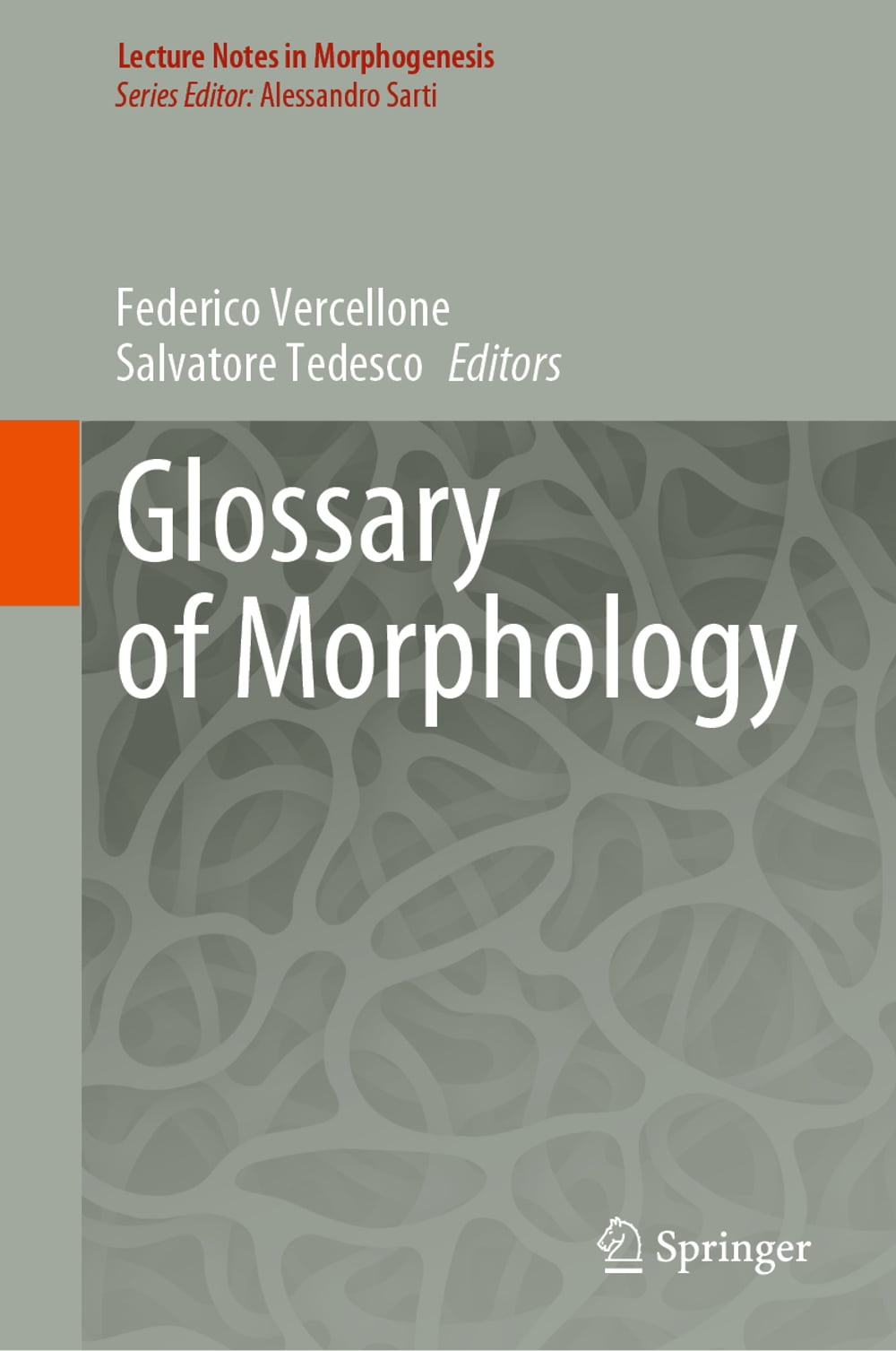



This book is a significant novelty in the scientific and editorial landscape. Morphology is both an ancient and a new discipline that rests on Goethe's heritage and re-forms it in the present through the concepts of form and image. The latter are to be understood as structural elements of a new cultural grammar able to make the late modern world intelligible. In particular, compared to the original Goethean project, but also to C.P. Snow's idea of unifying the “two cultures”, the fields of morphological culture that are the object of this glossary have profoundly changed. The ever-increasing importance of the image as a polysemic form has made the two concepts absolutely transitive, so to speak. This is concomitant with the emergence of a culture that revolves around the image, attracting the verbal logos into its orbit. Incidentally, even the hermeneutic relationship between past and present relies more and more on the image, causing deep changes incultural environments. Form and image are not just bridging concepts, as in the field of ancient morphology, but real transitive concepts that define the state of a culture. From the Internet to smartphones, television, advertising, etc., we are witnessing – as Horst Bredekamp observes – an immense mass of images that fill our time and affect the most diverse areas of our culture. The ancient connection between science and art recalled by Goethe emerges with unusual evidence thanks to intersecting patterns and expressive forms that are sometimes shared by different forms of knowledge. Creating a glossary and a culture of these intersections is the task of morphology, which thus enters into the boundaries between aesthetics, art, design, advertising, and sciences (from mathematics to computer science, to physics, and to biology), in order to provide the founding elements of a grammar and a syntax of the image. The latter, in its formal quality, bothexpressive and symbolic, is a fundamental element in the unification of the various kinds of knowledge, which in turn come to be configured, in this regard, also as styles of vision. The glossary is subdivided into contiguous sections, within a complex framework of cross-references. In addition to the two curators, the book features the collaboration of a team of scholars from the individual disciplines appearing in the glossary.
-
Curatore:
-
Anno edizione:2020
-
Editore:
-
Formato:
Lingua:
Inglese
Compatibilità:
Tutti i dispositivi (eccetto Kindle) Scopri di più
Layout:
Reflowable
EAN:
9783030513245

Formato:
Gli eBook venduti da Feltrinelli.it sono in formato ePub e possono essere protetti da Adobe DRM. In caso di download di un file protetto da DRM si otterrà un file in formato .acs, (Adobe Content Server Message), che dovrà essere aperto tramite Adobe Digital Editions e autorizzato tramite un account Adobe, prima di poter essere letto su pc o trasferito su dispositivi compatibili.
Cloud:
Gli eBook venduti da Feltrinelli.it sono sincronizzati automaticamente su tutti i client di lettura Kobo successivamente all’acquisto. Grazie al Cloud Kobo i progressi di lettura, le note, le evidenziazioni vengono salvati e sincronizzati automaticamente su tutti i dispositivi e le APP di lettura Kobo utilizzati per la lettura.
Clicca qui per sapere come scaricare gli ebook utilizzando un pc con sistema operativo Windows
